Was the Haul Worth It? An Investigative Series into Fast Fashion, Part One

By: Sofia Marquez

Have you ever heard of Shein, Romwe, or Aliexpress? Chances are you’ve seen a video or two of teenagers emptying out large boxes full of bags with a big Shein label on them. You may hear that one really annoying computer-like voiceover saying “$700 Shein Haul” or “I bought 60 items for only $250!”. 

Well, those are {insert brand name here} hauls. 

Sometimes, you’re paid to post a try-on video about your clothes, or you are just flexing how you are able to buy a new shirt every time a *micro trend* pops up. But was it worth it? Let’s take a look at the true cost of your clothing haul. What other problems are packed tightly in those Shein bags?

Micro Trends
The trend cycle, where every 20 years fashion repeats itself, or when a runway designer brings something new to their “spring collection”, which then filters down to department store versions. That was how it used to be. But now, with social media platforms and brands pumping out new designs every day, you can get the new trend affordably and quickly. \

According to Nssmag.com, “The Chinese multinational has conquered the very young western clientele thanks to a very careful marketing strategy and the possibility of offering models very similar to those that become trendy on social networks as soon as they become popular.”  This shows how instead of taking months for average stores to have clothing similar to what you see your favorite celebrities wearing, you can get the dress or pants the next day. 

In the past couple of decades, trends last a few years, maybe at a minimum a year or two. But now, the average trends last at most a season or two, but most likely, those boots you just bought will only be trendy for a month or two more.                

Goodonyou.com magazine writes “Faster production, exploitative manufacturing processes, and plastic clothing are needed to keep up with the demand that micro trends create.” TikTok influencers, who are wealthy people, are able to buy new clothes regularly. They will start a new fad every week, and because of their large following, people will want to buy those things. But, because there are so many influencers who are influencing so many people, this leads to our next problem…Stay tuned to hear about overconsumption!

The Origins of Superstitions

By: Karlee Montgomery

Friday the 13th has a bad reputation. Most people say it’s the day for the abnormal and most hated man: The Devil. In reality, it’s really not all that. Most people don’t even know the real back story, so let’s simplify a few things that people fear just because they’re different.

 Not all witches are mean and evil; most are just really misunderstood. Back in the old days, if people thought you were a witch you’d get burned alive, or many other harsh things they thought were completely normal. Other times they made people do harsh and very brutal tests and challenges to see if they were witches. If they didn’t pass, they were beaten and brutally killed. 

I know how most people think that black cats are the pets of witches and “the cat from hell”, and most people believed if you crossed paths with a black cat it was a sign and you were cursed until death. But in reality, it’s also good luck too! 

Last but not least, the devil himself, the man people hate for being different but most people don’t know. He used to be an angel but he got in trouble and became a fallen angel. Most things people find scary and evil have a much deeper backstory than you would think.

Stressful Expectations: A Poem

By: Isobel Gaedtke

The expectations in the air
Linger
An ongoing heat that is pushed around
The movement of students is stiff

The teachers are stern
Students learn
But the expectations rise
Like the temperature in the summer

It chokes me and astounds me
The heat is caught in my throat
And the teachers´ voices bounce
In my head
Building up in clumps

The classes are hard
But the curriculum is harder
I breathe through the fog
And struggle to relax
To work

But the teachers push and push
And the kids shove and shove
All of them pushing me to the ground
I am crushed in the movement
As the words and numbers
Stomp on my chest

I try to breathe
To struggle
To learn

But it comes back
As I try to relax
Closing in on me as I scramble
To trap my thoughts
But I´m trapped
And lost

The History of Hot Chocolate

By: Gracie Hanlon

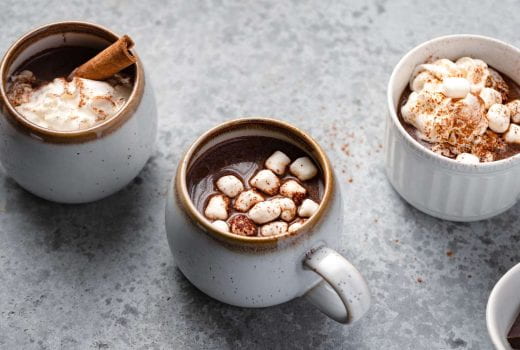
Since it is winter time, it is perfect weather for staying inside and warming up with one of the most popular winter drinks: Hot chocolate. This is the history of how people created the famous drink we know today. 

Hot chocolate goes way back, dating all the way back to 2,500-3,000 years ago, created in Mexico by Aztec and Mayan people. The “cocoa” was very important to their culture, they called it “xocolatl”. This explains why Mexican hot chocolate is one of my personal favorites. 

The original Mexican hot cocoa consisted of: Cocoa seeds, cornmeal, chili peppers, and what sets it apart from American hot chocolate is that they used water! It is still that way today, normally in the US your hot cocoa drink will be made from hot steamy milk but Mexican hot chocolate is the opposite. 

The original drink was served cold. (I guess this is because Mexico does not get that cold throughout the year) The drink was described as “cold and spicy” and was consumed by all classes of people. Everyone loved hot chocolate, well I guess not hot chocolate but the drink was popular. 

But hot chocolate soon evolved into something different. It began to spread across the world in the early 1500’s. An explorer brought the cocoa to Europe. It was beloved by the Spanish, but only the upper class. They were the ones to make it warm and get rid of chili peppers. The drink was now more of a dessert, it was sweetened but it wasn’t until the 1700’s that their drink spread across Europe. 

Once it hit London, the trend was everywhere. The English loved to drink it as a sweet treat for after dinner. They started chocolate houses where they sold it and they were very popular at the time. Chocolate houses had a similar concept to coffee houses. Chocolate was also expensive, so the English really dedicated time and money into the delicious drink. It was also consumed when sick. 

Now, we can microwave hot chocolate and enjoy a cup in as little as a few minutes. But the question is when did it come to be that way: When did hot chocolate become instant? 

Hot chocolate at the time was for when you got sick, it was even being sold in English pharmacies, but it was soon rebranded by different businesses and the drink was even more popular. 

In the Netherlands, in 1828, Coenraad Johannes van Houten invented a powder producing machine which helped with the process of making hot chocolate. This important discovery led to chocolate bars. So without the first spicy hot chocolate, we wouldn’t have any of our favorite chocolate bars today. The machine created a chocolate powder which made it easier to stir into milk or water so that was where the instant idea began. 

Tracing the very first business or brand is difficult, but Cadbury decided to sell Hans Sloane’s recipe, which was created as a remedy. It was the first brand of hot chocolate. With many others following, like Swiss Miss, possibly the most famous brand of hot chocolate, was launched to stores in 1961, and remains popular today. 

All in all, hot chocolate is a classic winter drink that has been around for a lot longer than most would think. I hope that you learned something about your favorite winter drink and let me know which you prefer hot chocolate or eggnog because I say hot chocolate, all the way!

Three Legends from Around the World

By: Sarah Thomas

1. The Legend of the Bow & Arrow War: Centuries ago, a group of native Alaskans, known as the Yupik, hosted an innocent game of darts. Little did they know that this little competition would begin a colossal war. During the games, one boy accidentally shot his competitor with a dart. The dart hit the other boy’s eyes. Although the first boy claimed it was an accident, the victim’s family accused this boy’s family. In fact, the injured boy’s father knocked out both of the eyes of the boy who shot the dart. Then, a relative of the now blind boy retaliated on the victim’s family. Legend says that as the families’ conflict escalated, multiple wars broke out across Alaska, spreading as far as some parts of Northwestern Canada. This is the 350-year-old legendary massacre. 

The Legend of the Bow & Arrow War originated in Quinhagak, Alaska. 

2. The Legend of El Dorado: In the 16th century, Spanish explorers traveled to the Andes Mountains, knowing about El Dorado. Who was El Dorado? What was his significance? For starters, El Dorado refers to the chief of the ancient Muisca tribe. El Dorado wasn’t even his name; it was a nickname given by the explorers. El Dorado means “gilded one”. The Spanish explorers journeyed all the way to the Andes Mountains in search of treasure, which they believed they would find in Lake Gultiva. During the time of the Muisca tribe, a new chief had risen to power. At the new chief’s induction ceremony, the people of the Muisca tribe covered their new chief in gold. Afterward, they would dump all sorts of treasures into Lake Gultiva to support their new chief. They ended up doing this almost every day. Legend says that the chief would take a bath in the lake every day to cover himself in gold. While the Spanish explorers never got to meet El Dorado, they were able to find some gold. But the valuable treasures thrown into Lake Gultiva were never to be found. 

The Legend of El Dorado originated in present-day Sesquile, Colombia

3. The Legend of the Shipwrecked Sailor: One day, a nameless sailor from the Middle Kingdom of Egypt miraculously survived a shipwreck, somewhere between the years 2040 and 1782 B.C. He was the only survivor out of 120 men on that ship. The sailor was lost at sea for a very long time, until one day, he stumbled upon an island. It was Island of the Soul. Not wanting to be stranded in the middle of the ocean, he quickly hastened to the island. When he reached the island, he met a serpent called the Lord of Punt. The Lord of Punt was very chatty, yet very wise. Soon, the sailor and the Lord of Punt were very good friends. Legend says that the Lord of Punt promised the sailor that in 4 months, a ship would come to save him. After four months, the ship arrived, just as the snake had promised. Legend says that the snake gave the unnamed sailor spices, incense, and other gifts. The presents were for the king. The snake requested the sailor to give the king presents and “make me a good name in your town.” This meant that the snake wanted to earn the king’s praise and to be known all over town. What happens after this is unknown. Maybe he sunk at sea in the rescue ship. Maybe he made it to the town and told the king about the loyal friend. Or maybe he forgot about the helpful snake over time. 

The Legend of the Shipwrecked Sailor originated in Egypt.